

What Is Environmental Engineering Services?
A property acquisition looks straightforward until the due diligence phase uncovers legacy contamination, indoor air quality concerns, or wastewater constraints that could affect cost, schedule, and liability. That is usually when the question becomes practical rather than academic: what is environmental engineering services, and when should an organization bring it into a project?
Environmental engineering services are the professional engineering and consulting activities used to identify, assess, manage, and resolve environmental conditions that affect land, buildings, infrastructure, and operations. In practice, that includes far more than pollution control. It often spans site assessments, hazardous materials investigations, remediation planning, water and wastewater engineering, regulatory compliance support, environmental monitoring, and coordination with broader building and infrastructure objectives.
For commercial, institutional, industrial, and public-sector clients, these services are rarely standalone. They are part of a larger decision-making framework that balances technical risk, legal obligations, occupant safety, capital planning, and long-term asset performance.
What is environmental engineering services in practice?
The simplest definition is that environmental engineering services help organizations manage the interaction between built assets and the surrounding environment in a safe, compliant, and efficient way. That sounds broad because it is broad. The discipline sits at the intersection of engineering, science, regulation, and project execution.
On one project, environmental engineers may evaluate soil and groundwater conditions before redevelopment begins. On another, they may design a strategy to address mold, asbestos, or lead-containing materials in an occupied facility. In municipal or industrial settings, the work may focus on stormwater, wastewater systems, discharge quality, or treatment processes. In each case, the objective is not merely to identify a problem, but to define a technically sound and practical path forward.
That is an important distinction. Environmental engineering services are not limited to testing and reporting. Strong technical support also includes interpretation, prioritization, risk analysis, and implementation guidance. Clients need to know what the findings mean, what action is required, what can wait, and how each decision may affect operations, budget, and compliance exposure.
The core functions environmental engineering services cover
Most organizations encounter environmental engineering services during a transaction, capital project, compliance review, or response to an identified issue. The scope varies, but several core functions are common.
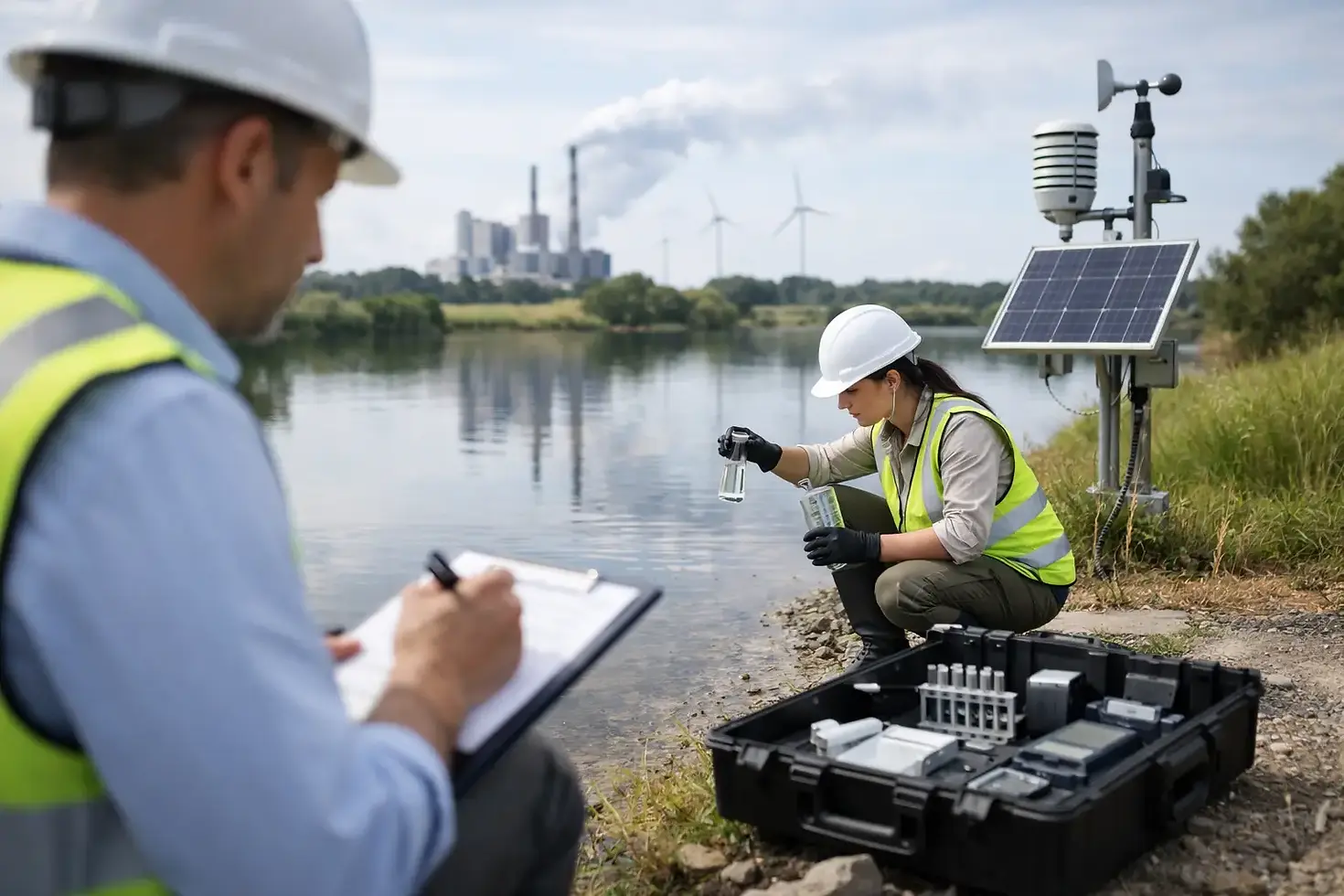
Site assessment is often the starting point. This may include historical reviews, records analysis, field investigations, sampling, and evaluation of recognized environmental conditions. The purpose is to understand whether a site carries contamination risk, what the likely sources are, and whether further action is required before acquisition, financing, redevelopment, or construction.
Hazardous materials consulting is another major area. Many buildings still contain asbestos, lead-based paint, PCBs, or other regulated substances. Environmental engineers and consultants help identify these materials, assess condition and exposure potential, prepare abatement or management strategies, and support safe renovation or demolition planning.
Water-related services are also central to the discipline. Depending on the property or facility, this may involve potable water quality, wastewater management, drainage concerns, stormwater controls, or process-related water issues. The technical challenge is often tied not just to system performance, but to permit requirements, public health protection, and lifecycle maintenance.
Remediation planning and oversight are frequently required where contamination has been confirmed. That work can include delineating the extent of impact, evaluating remedial options, preparing cleanup plans, coordinating with contractors, and verifying that corrective actions achieved the intended standard. The best solution is not always the most aggressive one. It depends on the site use, regulatory criteria, timing, cost tolerance, and future redevelopment goals.
Environmental compliance support rounds out the picture. Many owners and operators need guidance on evolving regulations, reporting obligations, environmental management procedures, and documentation standards. In these cases, environmental engineering services function as both technical advisor and risk management resource.
Why these services matter to the built environment
In the built environment, environmental conditions are rarely isolated issues. They affect transactions, design, construction sequencing, occupancy, insurance, and reputation. A contaminated soil finding can delay redevelopment. An unmanaged asbestos issue can disrupt a renovation program. Poor water quality can create public health concerns and operational liability.
This is why experienced clients tend to engage environmental engineering support early. Early involvement improves decision quality. It helps define constraints before they become change orders, enforcement issues, or emergency responses. It also creates better alignment between environmental requirements and the broader engineering, architectural, and project management team.
There is a financial dimension as well. Environmental problems are expensive when they are discovered late or addressed reactively. Upfront assessment and planning do not remove all uncertainty, but they do reduce avoidable risk. They also help owners and project teams distinguish between conditions that require immediate intervention and those that can be managed through phased planning.
For organizations with multiple assets, environmental engineering services can also support portfolio-level strategy. Instead of addressing one issue at a time, firms can prioritize capital needs, standardize compliance processes, and make better long-range decisions about maintenance, reinvestment, and redevelopment.
What environmental engineering services do not mean
One common misconception is that environmental engineering services are only relevant when a site is already contaminated. In reality, much of the value lies in prevention, planning, and controlled execution. A facility may be operating normally yet still require environmental review because of aging infrastructure, regulatory changes, indoor environmental quality concerns, or planned construction activity.
Another misconception is that these services are interchangeable with general environmental consulting. There is overlap, but engineering-led environmental services typically bring a stronger emphasis on technical design, system performance, regulatory interpretation, and implementation within complex built environments. That difference matters when projects involve active facilities, public occupancy, infrastructure interfaces, or multidisciplinary coordination.
It is also worth noting that environmental engineering services are not one-size-fits-all. A hospital, manufacturing site, school, commercial tower, and municipal facility each present different operating risks, stakeholder expectations, and compliance requirements. The right scope depends on asset type, use, age, location, and project objectives.
What to look for in an environmental engineering partner
For sophisticated property and infrastructure projects, technical capability alone is not enough. Clients need a partner that can integrate environmental work into the realities of design, operations, schedules, procurement, and regulatory oversight.
That starts with multidisciplinary strength. Environmental issues often intersect with building science, civil engineering, mechanical systems, demolition planning, hazardous materials management, and project management. When those disciplines are coordinated under one roof, decisions are typically faster and more consistent.
Regulatory fluency is equally important. Environmental engineering services must align with applicable federal, state, provincial, and local requirements, but the real value comes from translating those requirements into workable project actions. Clients should not be left with technically correct reports that are difficult to operationalize.
Experience with occupied and operational environments also matters. Many environmental issues must be addressed without interrupting essential services, tenant occupancy, industrial production, or public access. That requires careful phasing, communication, and risk controls.
A dependable partner should also be clear about trade-offs. Sometimes the lowest-cost option creates longer-term liability. Sometimes the fastest response is not the most durable one. Credible environmental engineering advice explains those variables so decision-makers can act with confidence.
For organizations managing complex facilities and infrastructure, a leading multidisciplinary engineering firm such as Martech Group can provide added value by connecting environmental strategy with broader technical and project delivery needs.
When to engage environmental engineering services
The best time to engage these services is often before a problem becomes visible. Pre-acquisition due diligence, pre-construction planning, renovation design, demolition preparation, facility condition reviews, and compliance audits are all strong entry points.
That said, reactive engagement is sometimes unavoidable. Spills, water intrusion, tenant complaints, failed inspections, or unexpected construction discoveries can all trigger the need for immediate assessment and response. In those situations, speed matters, but so does disciplined technical judgment. Fast decisions without a clear understanding of risk can compound the issue.
There is also an operational case for ongoing support. Organizations with recurring environmental obligations, aging facilities, or active capital programs often benefit from a long-term advisory relationship rather than a series of isolated assignments. Over time, that approach improves continuity, documentation, and strategic planning.
What is environmental engineering services really about?
At its core, it is about giving owners, developers, institutions, and public agencies a defensible path through environmental complexity. The work combines investigation, analysis, design thinking, and regulatory awareness to protect people, assets, and project outcomes.
The strongest environmental engineering services do more than identify risk. They help clients make informed decisions under real-world constraints, whether the issue involves contamination, hazardous materials, water systems, compliance, or redevelopment planning. When delivered with precision and a solutions-first mindset, these services become an essential part of responsible asset management and sustainable project delivery.
If an environmental question has the potential to affect safety, compliance, schedule, or long-term liability, it is usually worth addressing earlier than later.


Comments